Mechanical & Motion Couplings

Couplings

Category
Couplings
Capability
Mechanical & Motion

Couplings

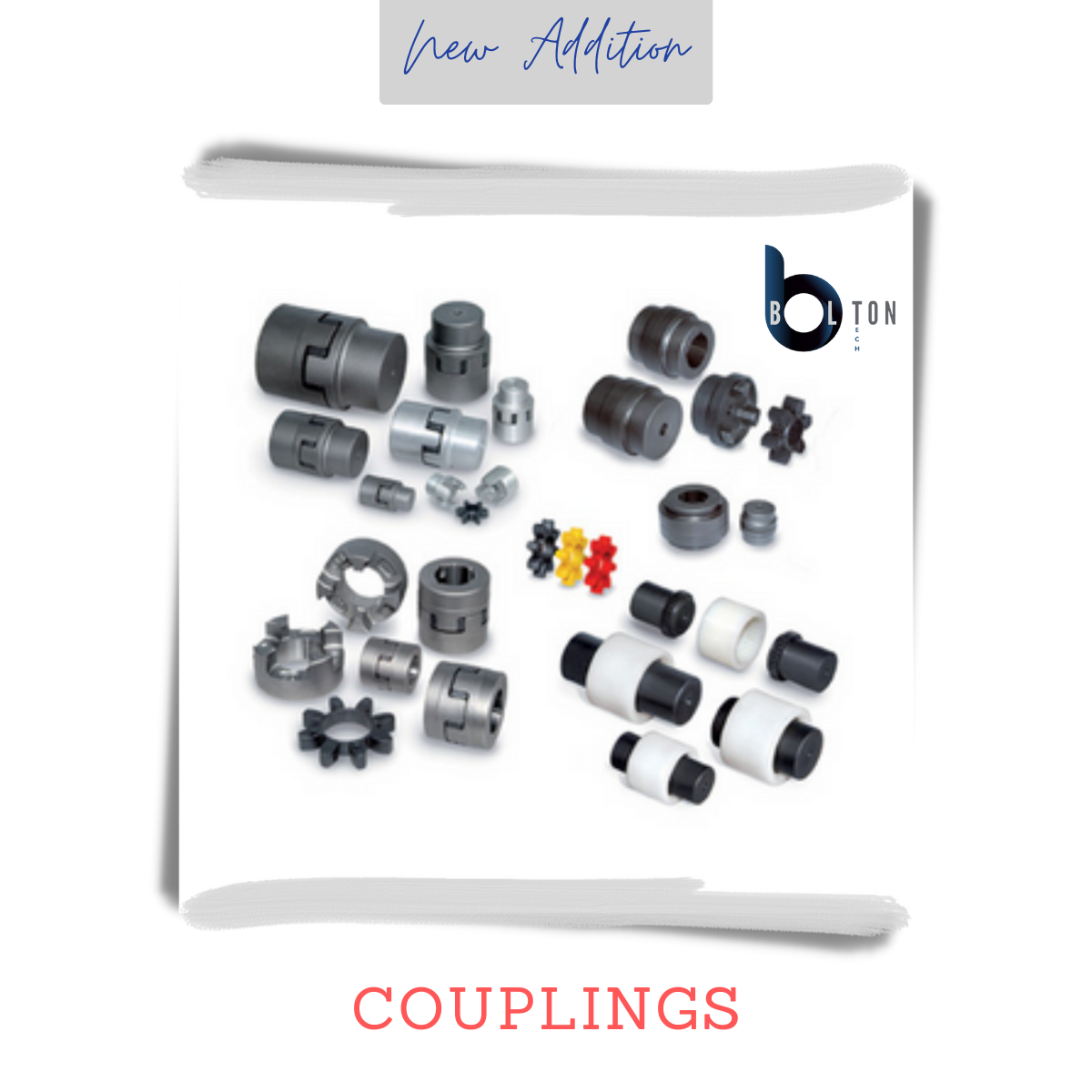
Couplings are mechanical components used to connect two in-line shafts to enable one shaft to drive another at the same speed. A coupling can be rigid or flexible, allowing various amount of angular, radial, and axial misalignment between the two shafts. Couplings can be used to reduce shock and overload, which can decrease wear on the machine and increase overall lifetime. Unlike clutches, couplings are not designed to engage-disengage as a normal operation.
What to include in your RFQ →

Documentation & RFQ readiness

BOLTON sources and supplies to specification. Documentation availability depends on the product, its manufacturer/supplier source and your stated requirement, and can be confirmed during quotation. To get an accurate quote quickly, include:

  • The exact manufacturer part number (MPN) and quantity required
  • Any drawing, specification or standard that applies, where relevant
  • Required documentation — e.g. certificate of conformity, datasheet, test report, SDS/TDS, calibration certificate or traceability, where applicable
  • Delivery location and required-by date

Description

Couplings

Couplings are mechanical components used to connect two in-line shafts to enable one shaft to drive another at the same speed. A coupling can be rigid or flexible, allowing various amount of angular, radial, and axial misalignment between the two shafts. Couplings can be used to reduce shock and overload, which can decrease wear on the machine and increase overall lifetime. Unlike clutches, couplings are not designed to engage-disengage as a normal operation.
Reviews

There are no reviews yet.

Be the first to review “Couplings”

Your email address will not be published. Required fields are marked *