Mechanical & Motion Mechanical Seals & Related Parts

Mechanical Seals & Related Parts

Category
Mechanical Seals & Related Parts
Capability
Mechanical & Motion

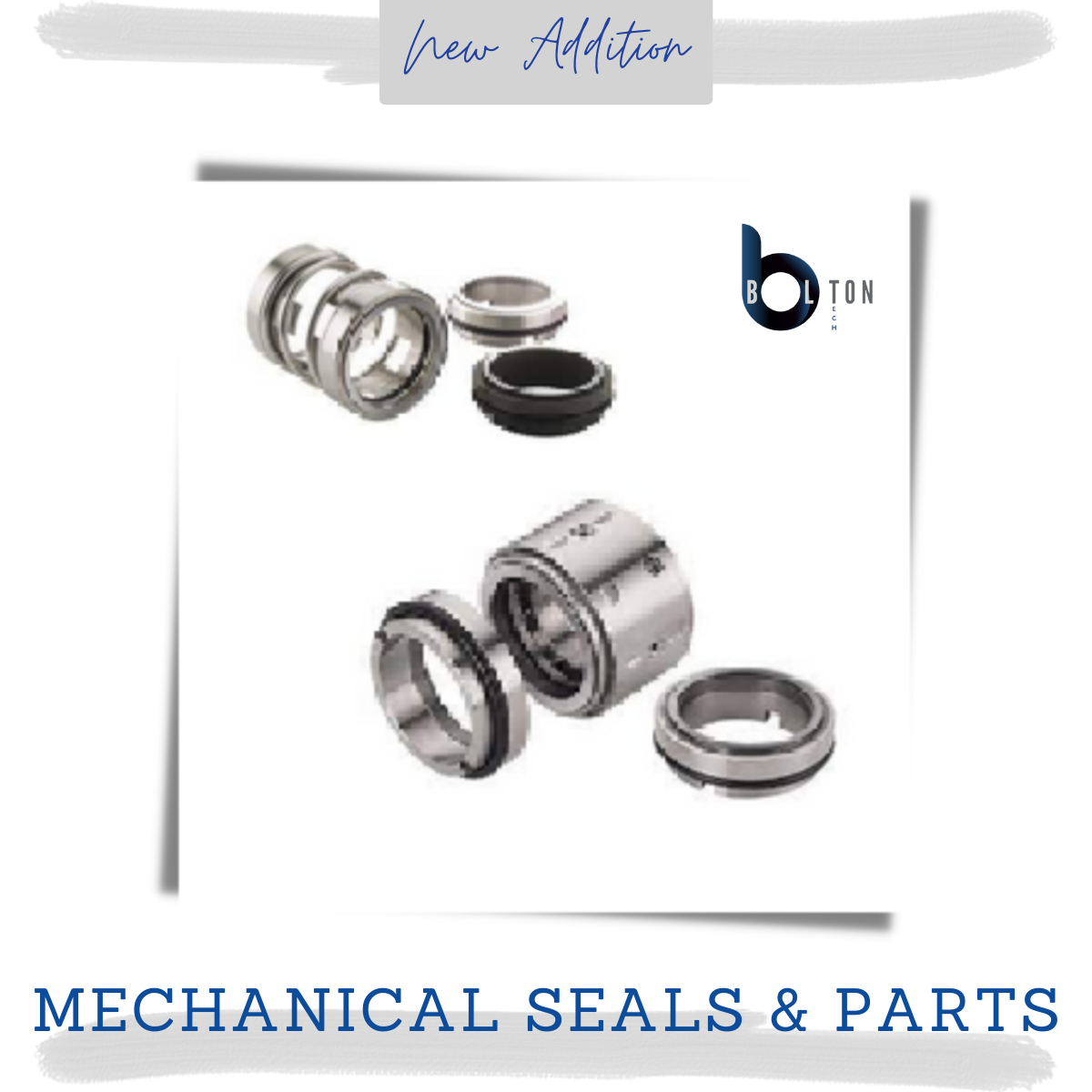
A mechanical seal is a machine device designed to seal the passage of a rotating portion (often a shaft) through a wall (usually the machine casing). The mechanical seal consists of two surfaces that slide on each other – normally at right angles to the rotational axle – and are forced together by axial forces. A liquid or gaseous lubricating coating exists between the sliding surfaces.

Every mechanical seal has five essential components:

-One ring (often the seal face) circulates in time with the rotating component (shaft)
-Secondary seal (often an O-ring) between the shaft and the ring.
-In the stationary section, a stationary ring (typically the stationary seat) is arranged (casing).
-Secondary seal (often an O-ring) between these components.
-The seal’s face spring.
What to include in your RFQ →

Documentation & RFQ readiness

BOLTON sources and supplies to specification. Documentation availability depends on the product, its manufacturer/supplier source and your stated requirement, and can be confirmed during quotation. To get an accurate quote quickly, include:

  • The exact manufacturer part number (MPN) and quantity required
  • Any drawing, specification or standard that applies, where relevant
  • Required documentation — e.g. certificate of conformity, datasheet, test report, SDS/TDS, calibration certificate or traceability, where applicable
  • Delivery location and required-by date

Description

A mechanical seal is a machine device designed to seal the passage of a rotating portion (often a shaft) through a wall (usually the machine casing). The mechanical seal consists of two surfaces that slide on each other – normally at right angles to the rotational axle – and are forced together by axial forces. A liquid or gaseous lubricating coating exists between the sliding surfaces.

Every mechanical seal has five essential components:

-One ring (often the seal face) circulates in time with the rotating component (shaft)
-Secondary seal (often an O-ring) between the shaft and the ring.
-In the stationary section, a stationary ring (typically the stationary seat) is arranged (casing).
-Secondary seal (often an O-ring) between these components.
-The seal’s face spring.
Reviews

There are no reviews yet.

Be the first to review “Mechanical Seals & Related Parts”

Your email address will not be published. Required fields are marked *