
Description
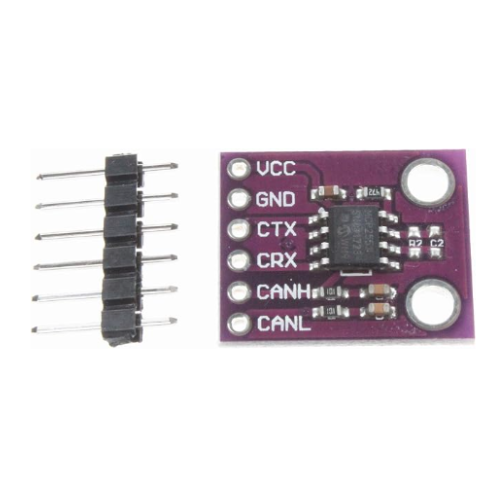
MCP2551 High-Speed CAN Transceiver Module — BOLTON SKU 55653.
About the MCP2551 High-Speed CAN Transceiver Modul Technical
This module is built around the Microchip MCP2551 High-Speed CAN technical component, a transceiver that forms the physical-layer interface between a CAN protocol controller and the two-wire differential bus. The device implements the physical layer requirements of ISO-11898 and supports signalling at up to 1 Mb/s. It is specified for both 12 V and 24 V systems, and as many as 112 nodes can be connected. Slope control is set externally, allowing the driver edge rate to be slowed to reduce radiated interference. Protection covers thermal shutdown, short circuits to positive or negative battery voltage, and high-voltage transients, while power-on reset and brown-out detection keep an unpowered or browning-out node from disturbing the bus. Microchip lists the MCP2551 as not recommended for new designs and directs new work to the MCP2561, which is worth confirming against your own approved-parts position before ordering.
Key specifications
| Attribute | Value |
|---|---|
| Transceiver device | Microchip MCP2551 |
| Function | High-speed CAN transceiver (physical layer) |
| Standard | ISO-11898 physical layer requirements |
| Maximum signalling rate | 1 Mb/s |
| System voltages | Suitable for 12 V and 24 V systems |
| Maximum bus nodes | Up to 112 |
| Device temperature range | -40 to +85 degrees C (I) or -40 to +125 degrees C (E) |
| Protection | Thermal shutdown, short-circuit, high-voltage transient |
| Lifecycle status | Not recommended for new designs (successor MCP2561) |
| BOLTON SKU | 55653 |
Typical applications
A packaged transceiver module of this kind is used to give a controller board a CAN bus connection without laying out the physical layer on the board itself: bench development, instrumentation nodes, retrofit interfaces to existing 12 V or 24 V equipment, and test harnesses that need a node added temporarily. The externally set slope control matters where the installation has to meet an emissions limit. The 112-node figure defines the ceiling on how many such nodes one bus segment can carry.
Supplied by BOLTON Technical Equipment Supplies against request for quotation. Add this item to your RFQ basket to request pricing, lead time and documentation requirements (e.g. CoC, datasheets or test reports where applicable).




Reviews
There are no reviews yet.